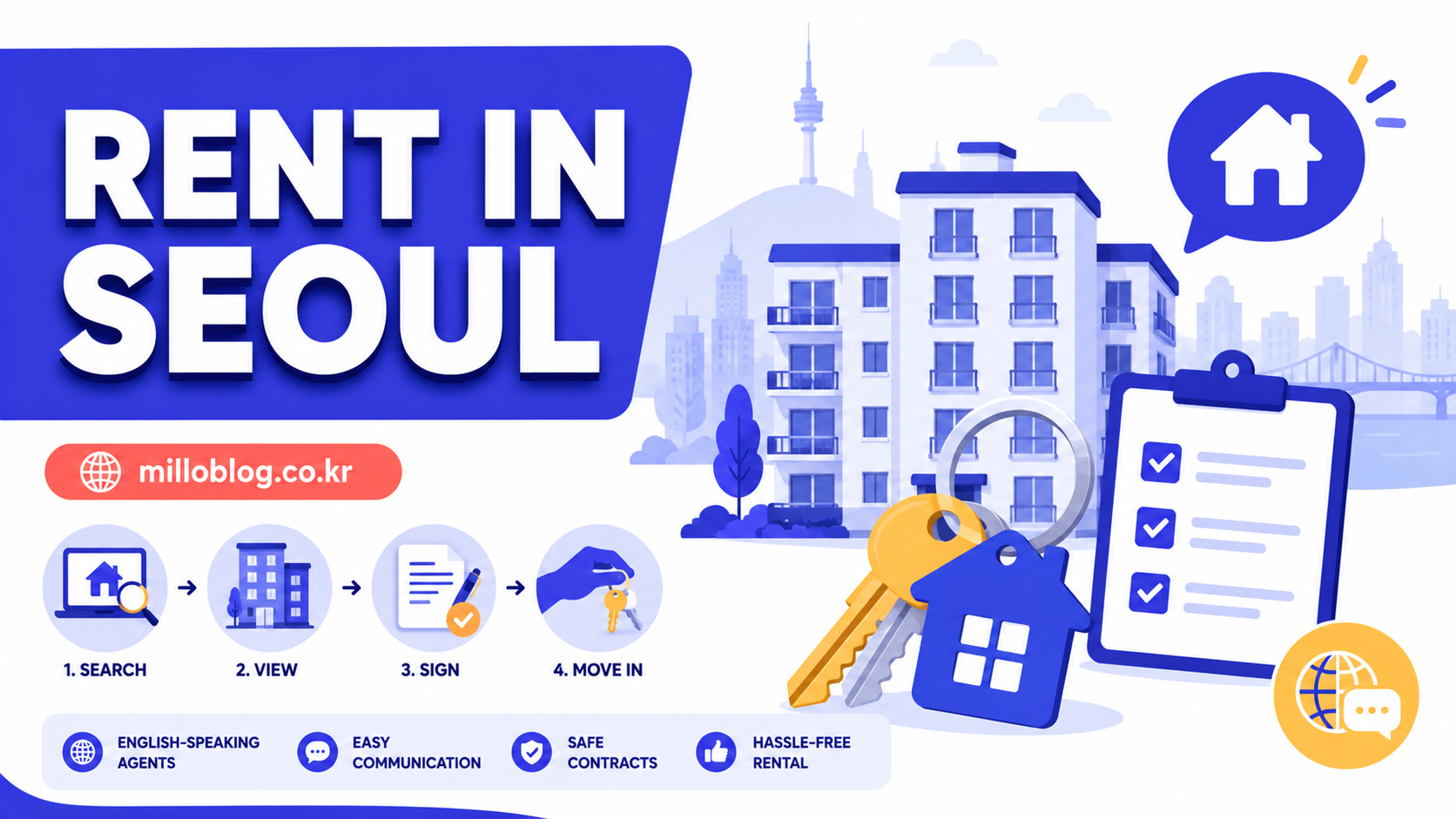
You can rent an apartment in Seoul without Korean — you just need the right documents and the right people to call. In this guide, you’ll learn exactly which paperwork to prepare, how to find English-speaking real estate agents, and how to protect your deposit before you sign anything.
Table of Contents
- What Documents Do You Need to Rent in Seoul as a Foreigner?
- Jeonse or Wolse: Which Rental System Fits You?
- How Do You Find English-Speaking Real Estate Agents in Seoul?
- What Happens During Viewing and Contract Signing?
- How Do You Protect Your Deposit After Move-In?
- What Hidden Costs Should You Budget For?
- Frequently Asked Questions
- Final Thoughts
What Documents Do You Need to Rent in Seoul as a Foreigner?
Landlords in Seoul rent to foreigners every day, but they will ask for proof you’re a legal resident. Getting these three things ready first saves you real time later.
Step 1: Get Your Alien Registration Card (ARC)
Most landlords and agents require a valid ARC before they’ll even show you a unit. If you’re still waiting on yours, apply through HiKorea, the government’s official immigration portal for foreign residents.
Step 2: Open a Korean Bank Account
You’ll transfer your deposit and rent through a Korean bank, not cash. Shinhan, KB, and Woori all have foreigner-friendly branches in central Seoul.
Step 3: Bring Your Passport and Proof of Income
Some landlords ask for an employment certificate or contract, especially for jeonse deals with large deposits. This isn’t universal, but keep a copy ready.
💡 Pro Tip: Scan your ARC, passport, and bank book to your phone before apartment hunting. Agents often ask for copies on the spot.
Jeonse or Wolse: Which Rental System Fits You?
Korea uses two rental structures you won’t find in most other countries. Understanding the difference upfront prevents a costly misunderstanding.
Wolse: Small Deposit, Monthly Rent
Wolse works like renting almost anywhere else. You pay a smaller deposit called bojeunggeum, plus monthly rent. This is the easiest and lowest-risk option for newcomers.
Jeonse: Large Deposit, No Monthly Rent
With jeonse, you hand the landlord one large lump-sum deposit — often 50–80% of the home’s value — and pay no monthly rent, with the full amount returned at lease end. In 2026, an 84-square-meter Seoul apartment averages around ₩600 million in jeonse deposit, so it typically suits tenants staying two years or more with significant savings.
Banjeonse: The Middle Ground
Banjeonse combines a larger deposit with a smaller monthly rent, sitting between full jeonse and ordinary wolse.
| System | Deposit Size | Monthly Rent | Best For |
|---|---|---|---|
| Wolse | Small (₩5M–20M) | Yes | Newcomers, short stays |
| Banjeonse | Medium-large | Reduced | 1–2 year stays |
| Jeonse | Very large (50–80% of value) | None | Long-term residents with capital |
⚠️ Important: Jeonse deposits are large enough that a landlord default can be financially devastating. Always confirm the latest safety requirements at the Ministry of Land, Infrastructure and Transport before committing.
How Do You Find English-Speaking Real Estate Agents in Seoul?
You don’t need to navigate this alone, and you don’t need to speak Korean to find a licensed agent.
Step 1: Try the City-Run Global Real Estate Network
Seoul operates hundreds of global real estate offices citywide, with the majority offering service directly in English. These agents are licensed under the same national exam as any Korean realtor.
Step 2: Use the Seoul Foreign Resident Center
The Seoul Foreign Resident Center connects international residents with a certified real estate agent for direct English-language counseling, with interpretation available in seven languages. You can call, email, or walk in.
Step 3: Understand How Agents Get Paid
You don’t pay anything upfront. You owe nothing until you sign a lease and complete the transaction — even after touring many listings. The legal commission is calculated from your deposit plus rent, and cannot exceed the government-set maximum rate.
💡 Pro Tip: When many expats first arrive in Korea, they assume real estate apps alone are enough — but a licensed agent is what actually gets you access to units and handles the paperwork correctly.
Ready to talk to someone directly? The Seoul Foreign Resident Center offers this consultation free of charge.
Contact Seoul Foreign Resident CenterWhat Happens During Viewing and Contract Signing?
The process moves fast once you find a place you like, so knowing the steps in advance keeps you in control.
Step 1: Tour the Unit
Your agent will show listings from their own book first, then bring in other agents’ listings through co-brokering if nothing fits — this is completely standard practice.
Step 2: Put Down a Holding Deposit (가계약금)
Once you choose a unit, a small holding deposit reserves it while the full contract is prepared — similar to earnest money in other countries.
Step 3: Check the Property Registry Before You Sign
Ask your agent for the 등기부등본 (property registry). This document shows whether the building already has mortgages or liens that could put your deposit at risk.
Step 4: Sign and Pay in Two Parts
- Step 1: Pay 10% of the deposit at contract signing (계약금)
- Step 2: Pay the remaining 90% on your move-in day (잔금)
How Do You Protect Your Deposit After Move-In?
Signing the lease is not the moment your deposit becomes legally protected — moving in and registering your address is.
Step 1: File Your Move-In Report (전입신고) on Day One
Visit your local dong office (community center) on your move-in day to register your new address. Don’t delay this by even one day.
Step 2: Get the Fixed-Date Stamp (확정일자)
At the same visit, get your contract stamped with a fixed date. Completing this registration and fixed-date stamp gives your deposit legal priority over other creditors if the landlord runs into financial trouble.
Step 3: Consider Deposit Guarantee Insurance for Jeonse
Foreign residents holding a valid ARC are eligible to apply for HUG deposit guaranty insurance on the same terms as Korean nationals. If your landlord can’t return your deposit, HUG pays you directly and pursues the landlord separately.
⚠️ Important: Korea saw a wave of jeonse fraud in recent years. Always check the registry for existing mortgages, and confirm current HUG eligibility rules before transferring a large deposit.
You can review current eligibility and apply for coverage directly through HUG’s official channels.
Check HUG Deposit InsuranceWhat Hidden Costs Should You Budget For?
Beyond the deposit, a few recurring costs surprise first-time renters in Seoul.
Agent Commission
Expect to pay a legally capped percentage of your converted transaction amount, negotiated with — but not exceeding — the government’s maximum rate for your deposit range.
Maintenance Fee (관리비)
Most apartments and officetels charge a monthly building maintenance fee separate from rent, covering cleaning, security, and common-area utilities.
Moving Costs
Full-service movers (“pojang isah”) pack, move, and unpack everything for you, which many expats find worth the extra cost for a stress-free move-in day.
Frequently Asked Questions
Can I rent an apartment in Seoul without speaking Korean at all?
Yes. English-speaking licensed agents are available citywide through Seoul’s global real estate network and the Seoul Foreign Resident Center, so you can complete the entire process in English.
Do I need an ARC before I start apartment hunting?
You don’t need it to browse listings, but most landlords and agents will require it before signing a contract, so apply as early as possible.
Is jeonse safe for foreigners?
It can be, if you check the property registry, complete your move-in registration immediately, and confirm your HUG insurance eligibility before transferring the deposit.
How much does a real estate agent cost in Seoul?
Nothing until you sign a lease. After that, the fee is a small, legally capped percentage of your deposit and rent combined.
What’s the difference between jeonse and wolse again?
Jeonse is one large refundable deposit with no monthly rent. Wolse is a smaller deposit plus ongoing monthly rent, closer to renting in most other countries.
Where can I get free help in English if something goes wrong?
The Seoul Foreign Resident Center offers free multilingual real estate counseling, including direct sessions with a certified real estate agent.
Do I need a Korean guarantor to sign a lease?
Not usually for standard wolse contracts, though some landlords may ask for proof of income instead. Requirements vary by landlord, so confirm this early in your search.
Final Thoughts
Renting in Seoul without Korean comes down to three things: get your ARC and bank account ready early, use a licensed English-speaking agent instead of going it alone, and protect your deposit with registration and insurance the moment you move in. Do these in order, and the language barrier stops being the obstacle you expected.
Official Sources
- HiKorea Official Immigration Portal
- Seoul Foreign Portal / Seoul Foreign Resident Center
- Seoul Metropolitan Government — Real Estate Brokerage Fee Guide
- Ministry of Land, Infrastructure and Transport